 Over 320 Reviews
Rodents, particularly rats, have been universally reviled and feared down through history as the bearers of bubonic plague and other diseases.
These mammals are of the order, Rodentia, and are characterized by a single pair of continually growing incisors in each of the upper and lower jaws.

The family also includes: mice; squirrels; prairie dogs; porcupines; beavers and guinea pigs.
The aromas of metal, vinyl and leather hold no appeal for rodents, and have nothing to do with their initial attraction to our beloved vehicles.
According to pest control specialists, mice, rats, chipmunks and squirrels seek nourishment, shelter and warm nesting places under the hood or in the enclosed space between each car door (the cabin).
They are lured by the odor of food wrappers and fast food wrappers and cups.
Once inside, its double, double toil and trouble to quote the ramblings of a wicked witch in Shakespearean lore. Damage can be particularly severe if a car sits unattended for a long period of time.
Mice can fit into very small, compact openings; a pencil-sized hole as pups and an opening no wider than a dime as adults.
Under the hoods of cars they are shielded from invading predators.
The wires there are also very attractive, and they gnaw on them incessantly to maintain the length of their teeth. Rodents can cause an immense amount of structural damage to a vehicle.
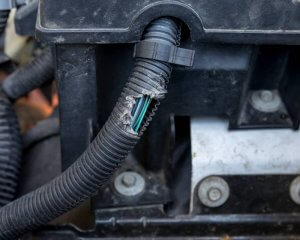
They tear up insulation, devastate wood surfaces and other materials. Inside an engine bay, they have been known to blow fuses and start fires.
To make matters even worse, most car insurance warranty policies do not cover extensive rodent damage to cars and there is always the significant danger that if a car is infested wither rodents, both drivers and passengers run the risk contracting the diseases that rodents carry.
According to Michael H. Parsons, a rat researcher from Fordham University, soy-based insulation, which is favored in most car wiring, is “catnip for rodents.”
Soy based insulation replaced petroleum about a decade ago and was well-intentioned.
It was both less expensive for car makers and more sustainable and eco-friendly than oil.
Parsons notes that: “We have to change the way we think about how we take care of our neighborhoods, and then we’ll be able to get rid of the rats.”
Less appealing wire wrapping is available and has already forced the hand of automakers because according to Car and Driver, America’s top auto enthusiast magazine, the issue of rodent damage to cars has brought about several class action lawsuits against car manufacturers Honda and Toyota.
10 Tips To Deter Rodents From Destroying Your Car
Additionally, our pest-control and pest-management specialists at Pestco recommend the following strategies and deterrents to help keep cars safe from rodent intruders.
It must be said that while there really isn’t one tried and true way to keep them out of cars, there are some strategies that when applied with due diligence and sometimes combined with one another that can be very effective.
Park Your Car In A Garage
Vehicles parked outdoors are vulnerable to rodent invasion especially if they are near grass and vegetation, which serve as rodent magnets. The risk increases if parking is near heavily wooded areas or tall grass.
Start and Move The Car Often
This frequent disturbance will discourage rodent nest building. Also, honk the horn and/or play the radio loud before starting the engine.
The Use of Traps
If the car is parked in a garage, traps situated along the walls is an effective first line of defense.
Leave The Hood Open
As odd as this may seem, this tactic is only a good idea if the car is in a garage and if it has an under hood light that can de disconnected, which will not affect battery potency. It is one way to make rodents uncomfortable because they would have no protection from larger animals.
Keep Your Car’s Windows and Sunroof Closed
If a car is left outside overnight, even the slightest opening in a window or on a sun-roof is a welcome mat to rodents. Make sure everything is closed up.
Keep Your Car’s Cabin Free of Clutter
Keep car cabin clutter-free by removing all paper, garbage, tissues and fast-food debris. Nothing says ‘hello there’ to rodents more effectively than the availability of dirt and bits of food lying around. This includes keeping both the car and its surrounding environment as clean as possible.
Light As A repellent
As nocturnal creatures, mice eschew the light, and LED varieties serve as perfect deterrents because they never get hot and they only utilize about a seventh of the power of the once popular incandescent bulbs.
Wrap Your Car’s Wires in Rodent-Deterrent Tape
These tapes are available online and are treated with capsaicin, which is found in hot peppers.
Excessive Noise
Plug-in and battery-operated sonic repellents contain strobes that offer a very bright light and are sometimes noisy, but one of the most effective solutions is to plug in an ordinary radio to a timer and monitor the sound so that it is on a low frequency, which will be loud enough for rodents to hear, but will disturb the sleep, peace and quiet of the home owner’s family and their neighbors.
Last But Not Least (and most importantly) … Use a peppermint Vehicle repellent Spray!
Protect Your Vehicle From Rodent Damage Today!
If you’re in and around the Greater Pittsburgh area, contact our teams at Pestco for any of your pest control needs!
Final thought about rodents anywhere: The problem with the rat race is that even if you finish first, you are still a rat! ~ Lily Tomlin